

01 Jewelry
Tuareg Silver Cross from Niger
A silver cross pendant is a compact high-value buy when the engraving is crisp and balanced.
Est. price varies Shop on Etsy
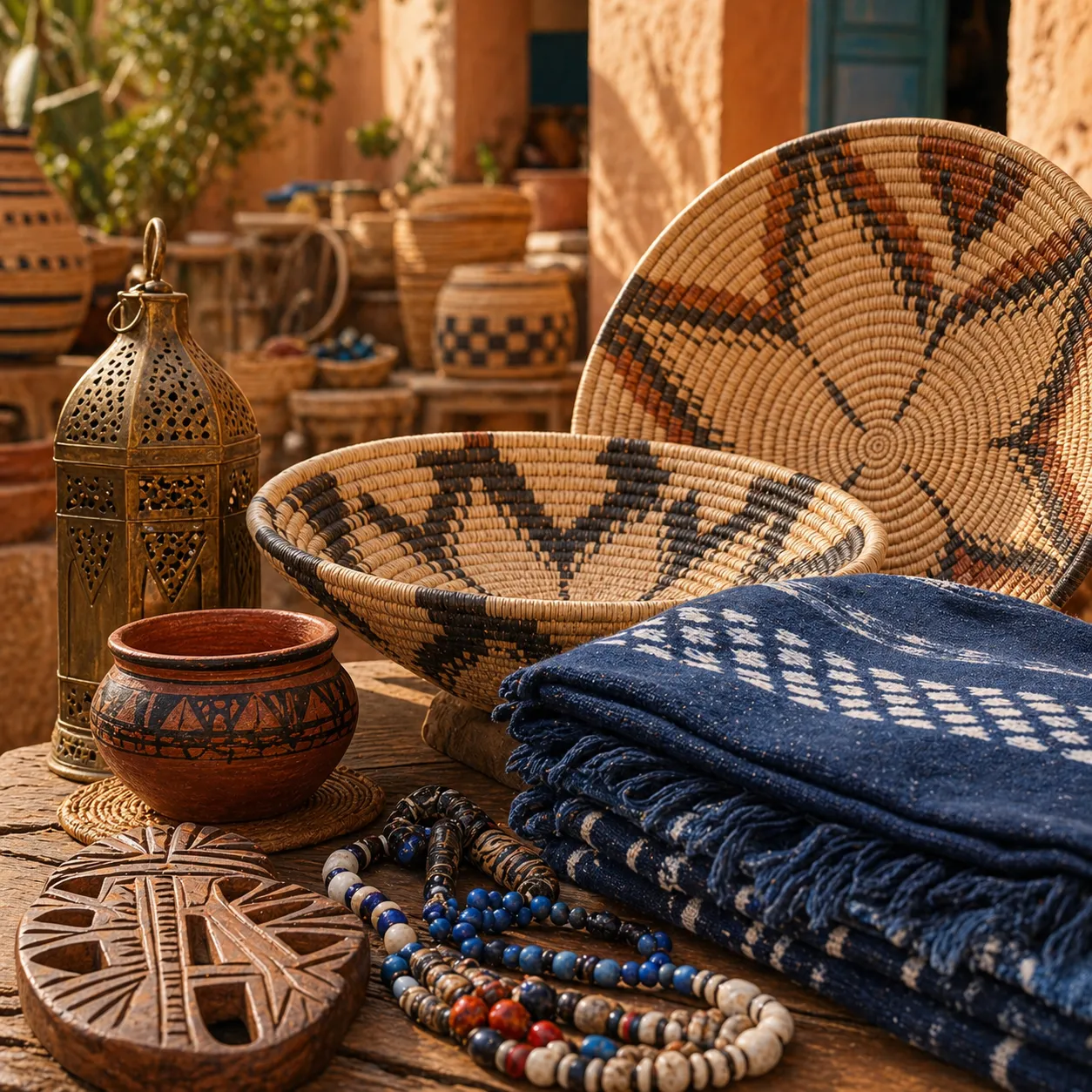
A souvenir from Africa should not feel like a token. It should carry heat, rhythm, patience, and place: the feel of woven fiber, the smell of coffee or spice, the color of a market stall, the memory of something made to be used.
Ten souvenirs from different parts of Africa, chosen for clear origin, useful form, and the kind of material detail that still matters once the trip is over.
A silver cross pendant is a compact high-value buy when the engraving is crisp and balanced.

A gara scarf is compact and colorful, with its dye pattern serving as its main feature.

A worked brass coffee tray brings Algerian hospitality to the table through engraved metal, a material often seen in North African serving ware. In Algeria, trays like this are used for presenting small cups of coffee or tea, connecting the object to home visits, markets, and shared refreshments.

A painted plate can work on a wall or table when the glaze feels even and the pattern breathes.

An aso oke clutch has gift value because the textile feels ceremonial while the shape stays practical.

Vanilla beans are small, valuable, and strongest when the pods still feel pliable.

A pouf cover packs flat and becomes a real living-room object once filled at home.

A contemporary mask panel should show clean carving and honest maker context rather than pretend age.

A folding carved chair is a bigger buy, but it becomes real furniture if the joints are tight.

A capulana wrap gives color, size, and flexibility as clothing, table fabric, or wall textile.
Algeria moves between brass, leather, dates, pottery, rugs, rosewater, silver, and calligraphy pieces with a measured desert-city mood.
View GuidesAngola is strong in carved wood, basketry, textiles, coffee, beadwork, masks, leather, and music-linked pieces with a warm hand-made edge.
View GuidesBenin favors bronze, appliqué cloth, carved wood, beadwork, calabash pieces, indigo, ritual-inspired objects, and market textiles.
View GuidesBotswana is calm and precise: baskets, leather, beadwork, printed cloth, salt-pan gifts, carved wood, jewelry, and wildlife art.
View GuidesThe stronger finds from British Indian Ocean Territory usually have a clear material, flavor, or use: specific finds that do not need a printed landmark to explain themselves.
View GuidesBurkina Faso is vivid in woven textiles, bronze figures, leather, indigo cloth, basketry, masks, drums, and carved stools.
View GuidesBurundi centers on basketry, woven mats, coffee, banana-fiber pieces, pottery, beadwork, wood, and modest household textiles.
View GuidesCameroon brings beadwork, carved stools, woven bags, coffee, masks, leather, pottery, and bright cloth into a varied craft mix.
View GuidesCape Verde is musical and coastal: grogue, woven pieces, ceramics, coffee, salt, shell-inspired jewelry, island art, and music gifts.
View GuidesCentral African Republic favors raffia, basketry, woodcarving, beadwork, woven mats, musical pieces, honey, and fiber objects.
View GuidesChad leans practical: leather, silver, woven mats, dates, pottery, camel-related pieces, beadwork, and desert textiles.
View GuidesComoros is fragrant and light: ylang-ylang, vanilla, cloves, baskets, embroidered caps, shell pieces, coconut goods, and textiles.
View GuidesDjibouti keeps souvenirs compact: baskets, salt gifts, coffee pieces, incense, textiles, beadwork, leather, and Red Sea objects.
View GuidesDR Congo is powerful in Kuba cloth, raffia, carved wood, copper, beadwork, baskets, records, and masks with regional depth.
View GuidesEgypt is strongest in cotton, alabaster, papyrus, brass, spices, glass, perfume oils, ceramics, and well-made leather.
View GuidesEquatorial Guinea favors carved wood, baskets, cacao, printed cloth, shell pieces, beadwork, coffee, and Gulf of Guinea food gifts.
View GuidesEritrea centers on coffee pots, woven baskets, silver, textiles, leather sandals, spices, embroidery, and Red Sea pieces.
View GuidesEswatini is bright in candles, woven baskets, glass, sisal pieces, beadwork, textiles, carved wood, and food gifts.
View GuidesEthiopia is grounded in coffee, woven cotton, silver crosses, baskets, berbere, leather, pottery, and manuscript-inspired art.
View GuidesGabon leans toward woodcarving, masks, raffia, baskets, textiles, beadwork, cacao, and small studio pieces.
View GuidesGambia brings batik, baskets, drums, leather, beadwork, woodcarving, spices, and food gifts from a river-market mood.
View GuidesGhana is vivid in kente, adinkra, beads, brass weights, shea butter, baskets, woodcarving, and cacao gifts.
View GuidesGuinea centers on indigo textiles, drums, baskets, leather, carved wood, kola-inspired gifts, beadwork, and woven mats.
View GuidesGuinea-Bissau favors cashew gifts, baskets, printed cloth, carved wood, shell pieces, beadwork, paintings, and palm-fiber objects.
View GuidesIvory Coast is strong in Baoulé cloth, carved masks, bronze, cacao, coffee, beadwork, baskets, and confident textiles.
View GuidesKenya is bright in beadwork, soapstone, baskets, coffee, tea, leather sandals, kanga cloth, and woodcarving.
View GuidesLesotho favors Basotho blankets, wool, mohair, hats, woven pieces, leather, pottery, and mountain food gifts.
View GuidesLiberia centers on country cloth, carved wood, baskets, coffee, cacao, beadwork, palm goods, and music-linked gifts.
View GuidesLibya is restrained in silver, leather, woven rugs, dates, olive oil, pottery, desert textiles, and coffee pieces.
View GuidesMadagascar is tactile and fragrant: vanilla, raffia, zebu horn, silk, spices, woodcarving, baskets, and paper goods.
View GuidesMalawi favors cane furniture, baskets, coffee, tea, woodcarving, printed cloth, beadwork, and lake-inspired pieces.
View GuidesMali is deep in mud cloth, silver, leather, indigo, carved wood, jewelry, baskets, and music pieces.
View GuidesMauritania leans spare: leather, silver, woven mats, dates, tea glasses, desert textiles, wooden bowls, and camel-related pieces.
View GuidesMauritius blends tea, vanilla, rum, baskets, textiles, model boats, shell-inspired jewelry, soaps, and sugar-island food gifts.
View GuidesMayotte is fragrant and compact: ylang-ylang, vanilla, baskets, coconut goods, textiles, spices, shell-inspired pieces, and pantry gifts.
View GuidesMorocco is generous in ceramics, rugs, leather, argan oil, brass, lanterns, spices, baskets, and textiles with disciplined color.
View GuidesMozambique centers on capulana cloth, cashews, carved wood, baskets, peri-peri gifts, beadwork, pottery, and coastal art.
View GuidesNamibia is spare and graphic: leather, Himba-inspired jewelry, baskets, salt gifts, wool, wood, desert photography, and seed jewelry.
View GuidesNiger favors silver, leather, woven mats, Tuareg-inspired jewelry, indigo cloth, dates, carved wood, and camel pieces.
View GuidesNigeria is bold in adire, aso oke, bronze, beads, leather, music, spices, woodcarving, and contemporary design.
View GuidesRepublic of the Congo brings raffia, carved wood, masks, textiles, baskets, music, cacao, and beadwork together.
View GuidesRéunion is lively in vanilla, rum, coffee, woven pieces, embroidery, soaps, lava-stone objects, and market food gifts.
View GuidesRwanda is composed in agaseke baskets, coffee, tea, imigongo art, woven trays, textiles, beadwork, and ceramics.
View GuidesSaint Helena, Ascension and Tristan da Cunha is about distance: coffee, stamps, island books, wool, sea salt, textiles, preserves, and maritime pieces.
View GuidesSão Tomé and Príncipe is fragrant in chocolate, coffee, woven pieces, island prints, coconut goods, vanilla, rum, and carved wood.
View GuidesSenegal is vivid in baskets, glass painting, fabric, leather sandals, coffee, jewelry, drums, and market spices.
View GuidesSeychelles favors vanilla, coconut, tea, woven hats, shell-inspired jewelry, soaps, prints, and spice gifts.
View GuidesSierra Leone centers on gara textiles, baskets, wood pieces, coffee, cacao, beadwork, palm products, and music-linked gifts.
View GuidesSomalia is strongest in frankincense, myrrh, woven baskets, silver, textiles, leather, coffee pieces, and carved wood.
View GuidesSouth Africa is broad and design-minded: beadwork, wire art, ceramics, rooibos, wine, leather, textiles, wood, and prints.
View GuidesSouth Sudan favors beadwork, baskets, leather, carved wood, woven mats, coffee-related pieces, textiles, and simple jewelry.
View GuidesSudan is restrained in baskets, leather, silver, dates, hibiscus, pottery, textiles, and coffee pieces.
View GuidesTanzania brings kitenge, tanzanite, coffee, tea, Zanzibar spices, baskets, woodcarving, and beadwork into focus.
View GuidesTogo centers on batik, baskets, carved figures, beads, drums, coffee, cacao, and tactile textile pieces.
View GuidesTunisia is crisp in pottery, fouta towels, olive oil, harissa, silver, baskets, ceramics, and dates.
View GuidesUganda is warm in barkcloth, baskets, coffee, tea, beadwork, banana-fiber pieces, woodcarving, and printed textiles.
View GuidesWestern Sahara is spare: woven mats, tea glasses, leather, silver, dates, textiles, camel-related pieces, and sand-toned pottery.
View GuidesZambia brings carved wood, coffee, honey, textiles, beadwork, copper jewelry, and market baskets into a grounded mix.
View GuidesZimbabwe is strong in Shona sculpture, baskets, beadwork, mbira pieces, printed cloth, leather, copper, and carved wood.
View Guides