
01 Jewelry
Silver Filigree Necklace from Yemen
A filigree necklace has strong presence when the metalwork stays crisp and the chain feels secure.
Est. price varies Shop on Etsy
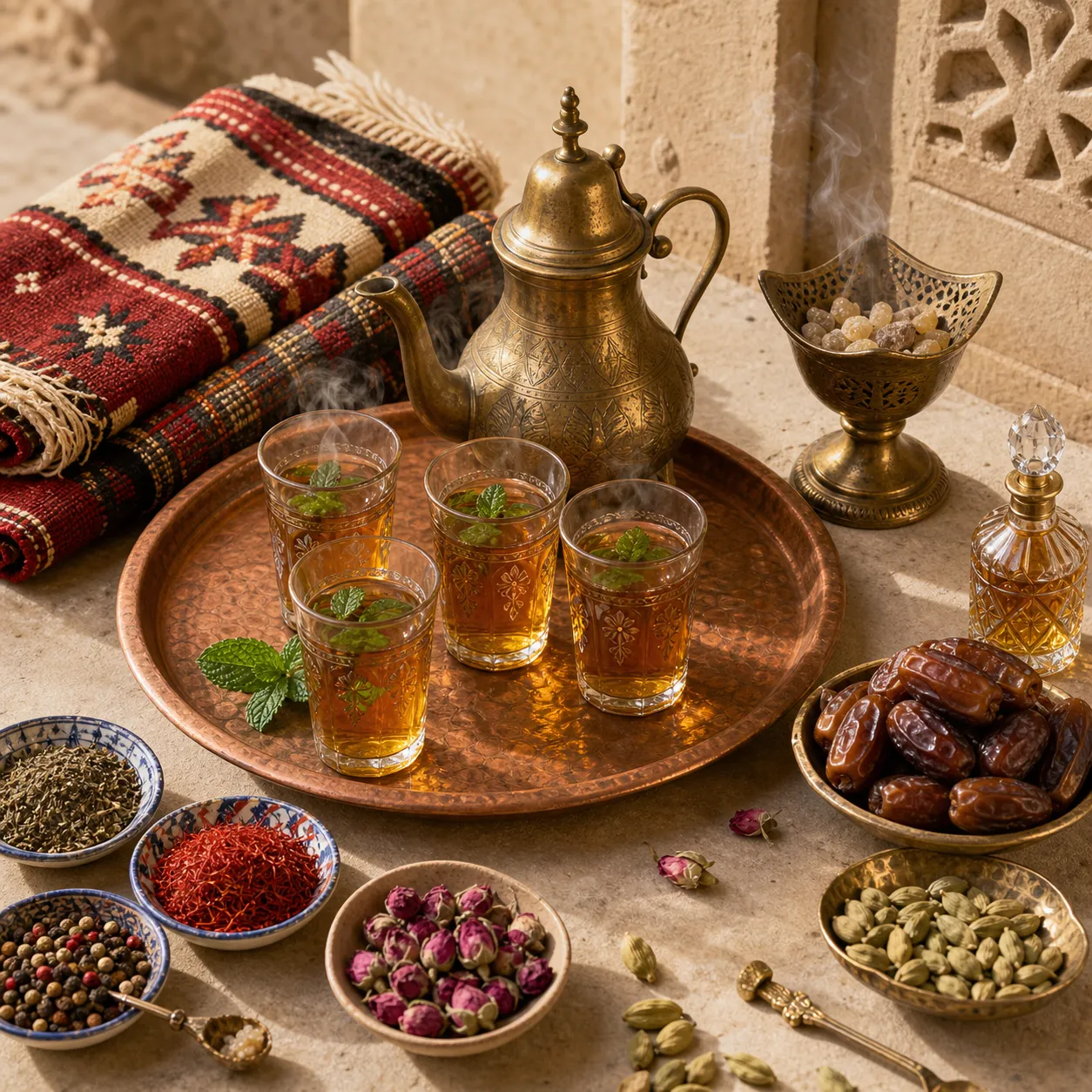
Souvenirs from the Middle East should feel generous. Not necessarily grand, but full of presence: a scent that lingers, a tray with weight, a textile with patience in it, something that belongs on a table where people are expected to stay.
Across the Middle East, the strongest objects have presence before branding: weight, scent, surface, serving ritual, or a gift that will actually be used.
A filigree necklace has strong presence when the metalwork stays crisp and the chain feels secure.

A pearl necklace is the premium choice, with luster, matching, and clasp quality deciding the value.

A sadu cushion has strong graphic value, with red, black, and white pattern that reads well in modern rooms.

An oud perfume bottle is small and valuable, with depth in the scent and no harsh edges.

A gold bracelet is the high-value buy, with weight, clasp quality, and clean design mattering most.

An Iznik bowl brings blue, white, and red pattern to the table in a form that still gets used.

An inlay box has high gift value when the mother-of-pearl pieces sit cleanly in the wood.

A reed basket carries wetland craft into a useful storage piece, especially when the base sits flat.

A mosaic tabletop is a strong decor buy when the stone pieces sit flat and the pattern feels balanced.

A natural pearl pendant is the premium pick, with luster and simple setting doing more than ornate framing.
Bahrain is refined and hospitable: pearls, dates, palm baskets, coffee pieces, oud, rosewater, gold charms, and incense vessels with a sea-trade polish.
View GuidesIran's gifts are made for close attention: carpets, miniature painting, khatam boxes, turquoise, saffron, copper enamel, rosewater, and formal textiles.
View GuidesIraq leans toward reed craft, copper coffee pots, dates, kilim cushions, glazed tiles, calligraphy, wool, cardamom, and table games with real presence.
View GuidesJordan is strong in mosaic, Bedouin textiles, Dead Sea salts, coffee cups, sumac, zaatar, olive wood, sand art, and desert-toned craft.
View GuidesKuwait favors sadu pattern, brass coffee service, bukhoor, pearls, dates, desert crystals, falcon leatherwork, cardamom, and small polished gifts.
View GuidesLebanon is a table full of gifts: cedar, blown glass, zaatar, arak, embroidered linen, copper cups, soap, mosaic, and small witty objects.
View GuidesOman is calm and fragrant: frankincense, silver, kumma embroidery, palm baskets, rosewater, coffee sets, wool, halwa, and incense burners.
View GuidesQatar keeps things polished: pearls, sadu bags, coffee pieces, oud, saffron dates, falcon leather, calligraphy, camel milk chocolate, and incense tools.
View GuidesSaudi Arabia is generous in oud, dates, sadu wool, brass coffee pots, prayer beads, saffron, cardamom, bukhoor burners, and palm trays.
View GuidesSyria is rich in inlay boxes, Aleppo soap, brocade, copper coffee pots, pistachio sweets, blown glass, backgammon, embroidery, and filigree.
View GuidesTurkey is vivid and useful: Iznik ceramics, kilim covers, copper coffee sets, pestemal towels, glass charms, sweets, soap, meerschaum, and spices.
View GuidesThe United Arab Emirates leans sleek: gold, oud, camel milk chocolate, coffee sets, sadu cushions, bukhoor, dates, falcon leather, pearls, and sand art.
View GuidesYemen brings together silver filigree, qamariya glass, mocha coffee, jambiya forms, futah cloth, Adeni spices, agate, palm baskets, and frankincense.
View Guides